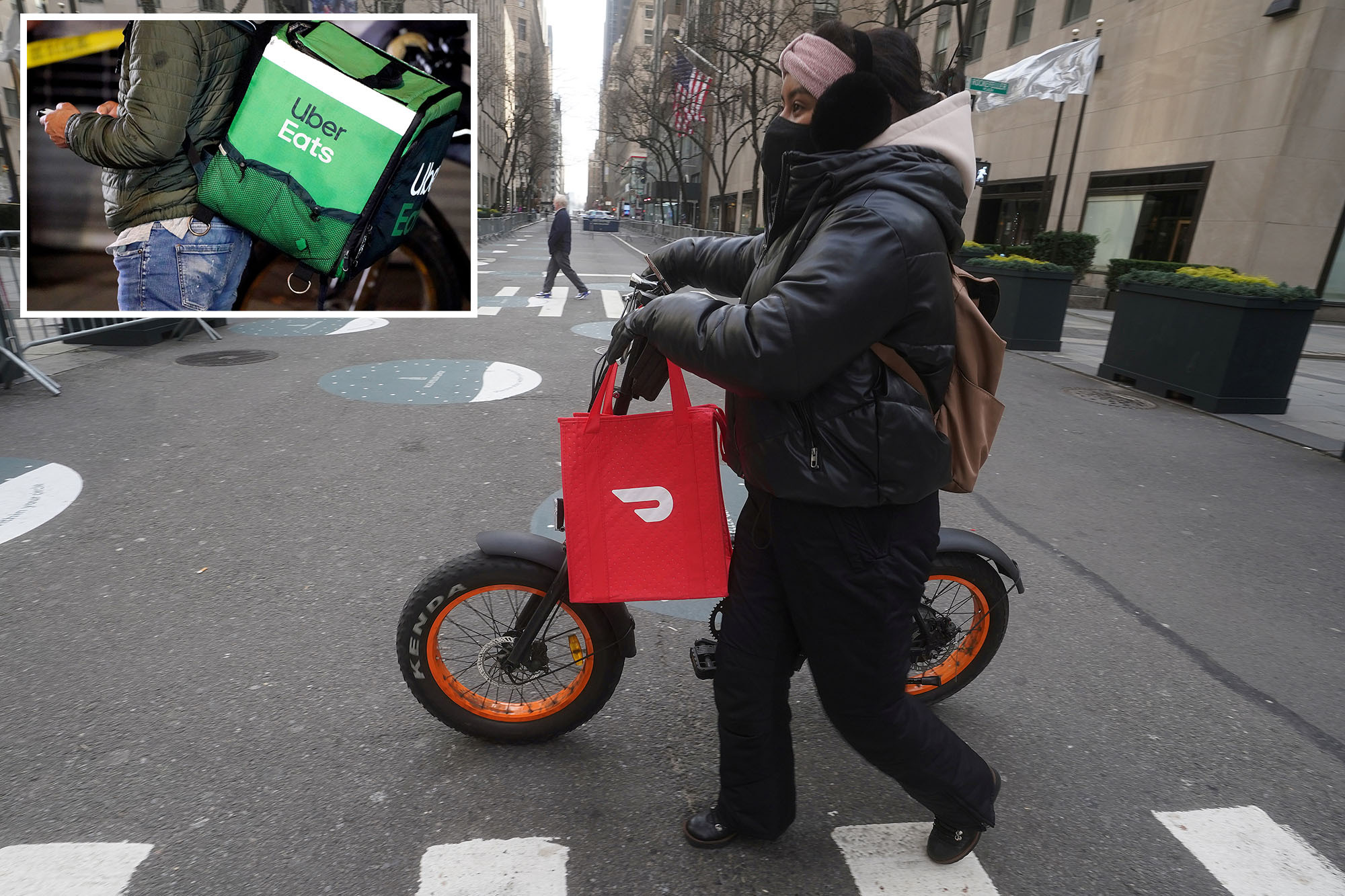
A Friday decision by a federal judge is set to up the pressure to tip your delivery guy or gal in New York City, even as tipping culture is widely viewed as out of control already.
US District Judge George B. Daniels declined to strike down a New York City law that requires food delivery apps such as Uber Eats and DoorDash to provide customers a tipping option before checkout.
Starting Monday, the new law will force delivery apps to prompt customers to tip before finalizing their orders, with a default suggestion of at least 10%. City officials said the change was needed to protect workers’ earnings after tips plunged when a new minimum-wage law went into effect in late 2023.
But the new policy will likely make it easier for delivery app workers to decline orders that don’t have big enough tips, a bevy of Reddit posts suggests.
“Many of us just do not accept no-tip orders so they sit around until someone finally takes it,” a user posted on a thread for DoorDash workers. “By then the food is usually cold and the customers are upset. Oh well, sucks to suck.”
“If I’m certain there’s no tip, it’s an instant decline,” another wrote.
The minimum hourly pay rate for app-based delivery workers required companies like Uber and DoorDash to raise pay to $21.44 an hour before tips. City officials say the policy dramatically boosted earnings, estimating it increased delivery worker pay by about $1.2 billion total from December 2023 to this month.
But the law also triggered backlash from delivery companies, which raised fees and warned it would distort the economics of app-based delivery.
Uber and DoorDash have also argued the new tipping law effectively strong-arms customers into tipping up front, undermining the traditional idea of a gratuity as a reward for good service.
“Allowing this law to take effect means we will likely see an immediate drop off in orders for New York’s small businesses, a worse experience for customers, and fewer overall deliveries for New York City dashers,” a DoorDash spokesperson said in a Friday statement.
“Forcing platforms to solicit a tip before checkout at a time when New Yorkers are sick of tipping culture and facing a growing affordability crisis is bad policy — plain and simple.”
Regulators said the minimum-wage law had quietly led DoorDash and Uber to change their tipping systems in ways the city alleged wiped out hundreds of millions of dollars in gratuities.
Critics say pre-tipping functions less like a thank-you and more like a requirement to secure delivery, since drivers can see the expected payout before accepting an order and routinely skip low- or no-tip jobs. In practice, customers who decline to tip up front risk long delays or canceled orders.
The concern was central to the lawsuit filed in Manhattan by DoorDash and Uber, which accused the city of forcing companies to pressure customers on the government’s behalf.
The companies warned that the system fuels resentment, tipping fatigue and higher prices — while distorting the relationship between customers and workers. City officials countered that app companies deliberately caused the problem.
“Hit decline and laugh at the cold-ass food they will eventually eat if … someone actually accepts the offer,” one Reddit user advised a DoorDash driver.
Another user urged their colleagues to block non-tipping customers en masse.
“If people just declined the low ballers then DoorDash would be forced to up the offer or the customer would need to pay more,” the person wrote.
A January report from the Department of Consumer and Worker Protection alleges DoorDash and Uber redesigned their apps after the city imposed a minimum wage in late 2023, shifting tipping to after delivery and triggering an estimated $550 million drop in worker tips.
With everyone from baristas to bellhops aggressively asking for tips, Americans are sick and tired of being pressured to pay gratuities, surveys show.
More than three in four Americans say tipping culture has “gone too far,” according to a 2024 poll.