
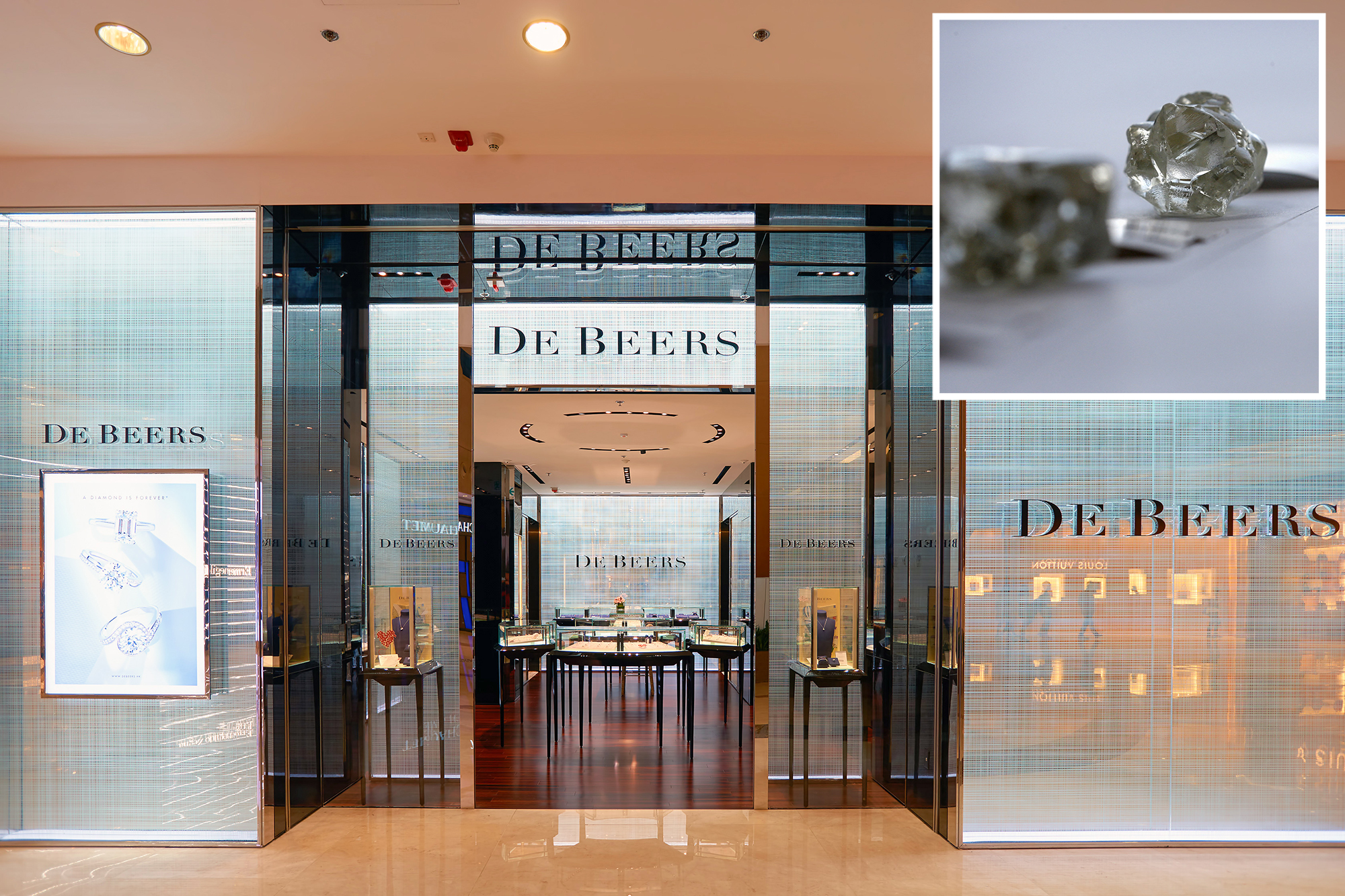
De Beers reportedly cut rough diamond prices in January, a rare retreat by the industry’s once-dominant broker as slumping demand, lab-grown stones and trade turmoil batter the global diamond market.
The reduction, the company’s first since December 2024, came after months of quietly selling discounted stones while keeping official prices well above market levels, people familiar with the matter told Bloomberg News.
At the first regular sale of the year on Monday, De Beers rolled out price cuts on rough stones weighing more than three-quarters of a carat, according to the report.
The exact size of the reductions was unclear, with De Beers changing how it billed customers and altering the makeup of its diamond boxes, making direct price comparisons hard, the people said.
At its regular sales, De Beers sets prices and tells customers — known as sightholders — how much they are expected to buy, a system that gives the miner significant leverage even though buyers can technically refuse purchases at the risk of jeopardizing future supply, according to Bloomberg.
The company sells its diamonds in pre-sorted boxes by size and quality.
The global diamond industry has been locked in one of its worst downturns in decades, with demand and prices for natural stones sliding sharply from 2023 through 2025 amid a prolonged slump that has forced miners to pull back production and rethink strategy.
A central pressure point has been the rapid rise of lab-grown diamonds, the prices of which have collapsed in recent years. That’s allowed them to grab market share — particularly in the bridal segment — and undercut natural diamonds across key consumer categories.
China, once a critical growth engine for the industry, has also turned into a drag, as a weak economy and falling marriage rates have sapped demand for diamond jewelry.
Meanwhile, geopolitical factors such as tighter sanctions on Russian diamonds have hampered the industry as broader tariff threats and trade frictions continue to loom over the supply chain.
Trade tensions under President Trump have added uncertainty to India’s diamond industry.
Last year, he escalated US tariffs on a range of Indian imports, including gems and jewelry, ultimately lifting duties to 50% on affected goods and injecting fresh uncertainty into the global diamond trade.
The move hit India’s diamond industry at a vulnerable moment. India cuts and polishes roughly 90% of the world’s diamonds by volume, and the US is its single largest market, accounting for roughly one third to nearly half of diamond and jewelry exports.
After the higher tariff rate took effect, shipments of diamonds from India to the US fell sharply, with multiple reports describing exports as having been cut by more than half.